
Technology

2 07, 2016

Liberal arts needed in the tech world (David Kalt, Wall Street Journal)

By |2016-11-02T11:52:10-04:00July 2nd, 2016|2016, education, Employment, Everything Else, July, Language, News, Philosophy, Technology, U.S. / Canada|0 Comments

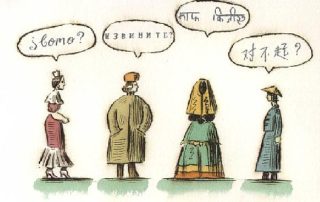
Liberal arts needed in the tech world: why having a facility for languages, of all sorts, enhances the richness of software development. From the editorial: Most liberal arts degrees encourage a well-rounded curriculum that can give students exposure to programming alongside the humanities. Philosophy, literature, art, history and language give students a thorough understanding of how [...]
28 06, 2016

Of books to books: Washington Irving on the library of Westminster Abbey

By |2016-11-02T11:52:10-04:00June 28th, 2016|2016, Academia, Debate / dialogue, Europe, Everything Else, June, Language, Libraries, Literature, Philosophy, poetry, Quotes, Technology, U.S. / Canada|0 Comments

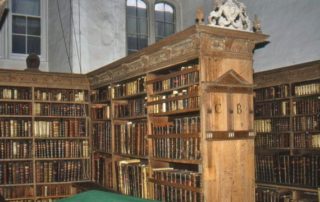
Of books to books: Geoffrey Crayon speaks to volumes in the library of Westminster Abbey, and ponders the ways time and technology transform our knowledge. “Language gradually varies, and with it fade away the writings of authors who flourished their allotted time…. Formerly there were some restraints on this excessive multiplication. Works had to be transcribed by [...]

19 06, 2016

In Praise of Encyclopedias (Joseph Epstein, Wall Street Journal)

By |2016-11-02T11:52:11-04:00June 19th, 2016|2016, Arts, Europe, Everything Else, History, Journalism, Language, Literature, News, Philosophy, Technology|0 Comments

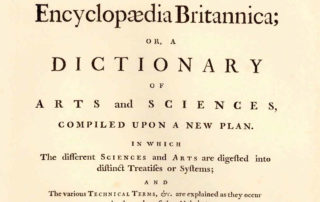
Has the age of the encyclopedic excellence passed us by, or can (or should) it be revived? The author praises the eleventh edition of the Encyclopedia Brittanica (1910-11) as "the last great encyclopedia." From the editorial: Its greatness derived not alone from its contributors or its organization but from the spirit infusing it. This spirit [...]

17 06, 2016

Science first, humanities later (Vinod Khosla, Medium)

By |2016-11-02T11:52:11-04:00June 17th, 2016|2016, Debate / dialogue, Economics, Everything Else, History, June, News, Philosophy, science, STEM, Technology|0 Comments

Science first, humanities later: logic and computer science beat Jane Austen and Shakespeare. From the editorial: Though Jane Austen and Shakespeare might be important, they are far less important than many other things that are more relevant to make an intelligent, continuously learning citizen, and a more adaptable human being in our increasingly more complex, diverse [...]

2 06, 2016

Lunar travels, earthly travails

By |2016-11-02T11:52:12-04:00June 2nd, 2016|2016, Arts, Debate / dialogue, Everything Else, June, Observations, Philosophy, poetry, psychology, science, STEM, Technology, Writing|0 Comments

Lunar travels, earthly travails: from our fictional science correspondent. What different choices will our technology offer us? I recently traveled to the moon to get a better view of things. Not with Space-X or Virgin Lunar or other such transport, but by a method I cannot specify. What I mean is I cannot explain it [...]

1 06, 2016

The Humanities Code: how literature helps to write software (J. Bradford Hipps, New York Times)

By |2016-06-01T10:27:53-04:00June 1st, 2016|2016, Academia, Arts, Debate / dialogue, Employment, June, Language, Literature, News, STEM, Technology, U.S. / Canada, Writing|0 Comments

The Humanities Code: how literature helps to write software. The author talks about the creative process required to compose ideas in all languages, including the technological. From the article: I’ve worked in software for years and, time and again, I’ve seen someone apply the arts to solve a problem of systems. The reason for this [...]

26 05, 2016

Transhumanism: what does the future hold? (Washington Post)

By |2016-05-26T08:33:56-04:00May 26th, 2016|2016, Debate / dialogue, Everything Else, History, Literature, May, News, Philosophy, science, STEM, Technology|0 Comments

Transhumanism: what does the future hold? The Washington Post hosts a series of commentaries on the value and validity, the promise and peril, of transhumanism, with its promise to "transcend the human condition." So do we need the "transhumanities"? Or develop the next variant of digital humanities? From the introductory statement: Transhumanism, in its most extreme [...]

10 04, 2016

Where it’s at: the mystery and origins of the @ symbol (BBC News)

By |2016-04-10T16:45:14-04:00April 10th, 2016|2016, Economics, Employment, Europe, Everything Else, History, Language, Literature, News, Religion, Technology|0 Comments

Where it's at: or better, where "at" (@) has been. What is modern is ancient, if we should notice. From the article: "The earliest yet discovered reference to the @ symbol is a religious one. It features in a 1345 Bulgarian translation of a Greek chronicle. Held today in the Vatican Apostolic Library, it features the @ [...]

5 04, 2016

Computers transform our knowledge of the past (James O’Malley, Little Atoms)

By |2016-04-08T08:40:13-04:00April 5th, 2016|2016, Academia, April, Europe, History, Literature, News, Religion, Technology|0 Comments

Computers transform our knowledge of the past. According to the author, computerized quantitative analysis offers insights that traditional historical study cannot. From the article: Huge swathes of our past are slowly but surely getting digitised as old books and scanned and organised. It stands to reason that surely once the historians get to work it [...]

3 04, 2016

A classics major adds value for engineering and STEM (Forbes)

By |2016-04-08T08:38:27-04:00April 3rd, 2016|2016, April, Economics, Employment, Everything Else, Language, Literature, News, Philosophy, STEM, Technology, U.S. / Canada|0 Comments

A classics major adds value for engineering and STEM: a profile of Tim O'Reilly, who brings classical ethics and eloquence to the world of technology. From the article: O’Reilly has a deep understanding of how knowledge should disseminate in a society, and how best to make that happen.... Building a knowledge community is an art, [...]

Go to Top