


In praise of natural intelligence: in the age of AI, we must foster NI
Rimini, 20 March 2026
Dear editor,
It is a pleasure to write you in the spring, a time of bird song and flowering trees. To be sure, to experience this I have to go outside the city center where I live, but the short walk is rewarding, for spring shows us, or rather allows us to feel how nature is renewing itself. The Chinese sages tell us this is a time of restored wood and liver energy, energy of enthusiasm and direction and purpose.
The purpose that moves me to write is also in tune with this season. Here in Italy as everywhere else we hear, every day, more news and commentary on artificial intelligence. If we believe the commentary, we are experiencing the eighth wonder of the world or looming doom. Artifical intelligence will write for us, drive our cars, plan our lives, indeed think for us, as we enter into an “age of affluence” or an apocalyptic period of mass unemployment.
Or course people will claim, and rightly so, that driverless cars can be a good thing (anyone out on the highway can imagine that) and medical treatment and procedures will exponentially improve with advanced computations.
My springtime letter takes no issue with the algorithmic entrepreneurs or the developers of data centers. Carry on! What needs saying, what has stayed in shadow, is the complement and counterweight to AI excitement: natural intelligence. Natural intelligence, it seems to me, needs our care and cultivation.
What is natural intelligence? Conversely, we might ask, what is artificial intelligence? I would think each term helps us understand the other: and we should consider that without knowing natural intelligence we are at a loss, despite our enthusiasm, to knowing AI. In fact, I would argue that we cannot understand AI without “NI,” any more than one can understand yang without yin, day without night, or, to refer to your recent essay, digital without analog.
I would take it a step further and advance my claim: in order to realize the fuller potential of AI we must cultivate our natural intelligence. It is a cause for concern that our rush for AI leaves behind this care. It is as if our driverless cars, in their haste to advance, no longer recognize the road, the signs, or the destination. The machinery is fine, but the guidance is gone.
We may recall, it seems a generation ago, how writers began promoting the notion of “EQ” to pair with IQ: emotional intelligence became an asset, an attribute, to consider alongside intellectual ability. I suggest we now value natural intelligence in this light, in our time of AI.
What is natural intelligence? We all — it is inherent in the term — have an inkling or intuition what it means. Medieval and Renaissance writers distinguished between natural and artificial languages: natural language was the speech that surrounded your birth, your mother tongue, that you learned from your family, that came naturally to you. Artificial language was the language you learned in school — for many of these writers, Latin — with its inflected grammar and sophisticated syntax. So we can think of natural intelligence in the same way, as an intelligence inherent in nature and imbued in us by nature.
If it is imbued in us, you might ask, why should we cultivate it? More on this in a moment: common sense is not so common, we could say. But first I have a few examples of natural intelligence, as I understand it. These will help us see what we need to care for and foster, and first of all recover.
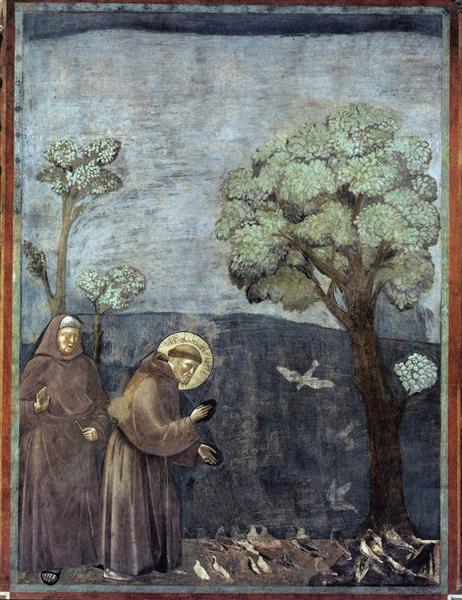
There is a tradition among the ancients — for example the great essayist Plutarch — that animals possess keen intelligence, intellectual and emotional, as well as many virtues. We can see a natural intelligence in the animals around us: the way dogs and cats discern our moods, for example; the fierce loyalty they show their owners; their ability to reason and communicate. Birds too are ingenious at building their nests and protecting their young. Some scientists, such as Stefano Mancuso, have found evidence that this intelligence extends to plants: they respond in ways to the environments we create for them, even the language we use in their presence. Jagadish Chandra Bose, the Indian philosopher and scientist, recorded data of energetic sensation in inanimate objects such as metals and rocks. These writers and thinkers advise us to attend to the natural world and bear responsibility for it, in order to understand ourselves, in our limits and our reach. Animals and plants have much to tell us, if we have ears to hear it.
Renaissance thinkers, those great readers of the ancients, brought natural intelligence into sharper focus through their investigations. One polymath, Leon Battista Alberti, criticized humanity for being out of harmony with nature, for pursuing artificial pleasures and exploiting natural resources to the point of summoning, karma-like, natural disasters upon its head. Leonardo da Vinci examined nature obsessively, especially the movement of water and the flight of birds. He could not suffer birds being sold in cages, and would buy and free them whenever he could. His observations of nature and its intelligence informed his painting and his studies: veins circulating the blood he compared to rivers; birds inspired his flying machines. And despite, or because of his inventiveness, he wrote more than once in his notebooks, “Tell me if anything was ever finished,” for nature constantly provided him with new insight.
Last but not least I would like to mention the tradition of Daoism. Daoism reminds us that we easily lose or sacrifice our natural intelligence to the sway of convention, to our ongoing socializing habits of mind and action. We block the natural energy that is around and within us, energy from the sky, the earth, from one another. Being with nature does not mean simply being outside “in nature” — though this is a very good thing — but more basically feeling nature in our bodies and our environment. Nature has a healing power that comes from the interconnectedness of all things.
Perhaps on the basis of these examples we can now see how our pursuit of artificial intelligence creates imbalance and fragmentation. Artificial intelligence lies outside us — we don’t understand fully how it works — and it gives us a sense of obvious power but also of powerlessness. It leads to amazing technological advancements; captains of industry herald its efficiency and “productivity gains.” Yet no one appears to know what the ultimate results will be or what guardrails might constrain it. Natural intelligence provides a sense of wholeness and unity. We can access it and apply it, if we have the mind to do so. In a certain sense its power is more modest; but it also more pervasive, universal, accessible, and balanced.
We feel the effects of AI in our sense of fragmentation, alienation, and loneliness. This sense of brokenness calls on us to restore our natural intelligence, which lies in our DNA and the air we breathe. Cultivating natural intelligence, in harmony with our pursuit of AI, helps us to recognize the true wonders of both. It is likely that we will realize the amazing promise of AI only when we are rooted in ourselves and our world, so that our natural intelligence informs us of how technology can deepen our sense of well-being and connectedness. And AI reminds us that whatever mission we undertake, on earth or elsewhere, we always have a home in humanity.
Sincerely, Roberto Fubini
For previous letters from Roberto Fubini, see here.

Leave A Comment