


If it isn’t in another category, it is here.
4
04, 2017
Death has no answer
A dialogue about life extension and limits, beyond biology and scholarship.
If it isn’t in another category, it is here.

A dialogue about life extension and limits, beyond biology and scholarship.
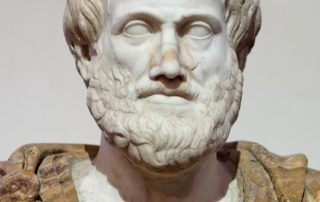
Aristotle and the modern computer: how the Greek philosopher's logic influenced the mathematical equations that underlie digital computation.

Classical literacy and modern scholarship: how knowledge of Latin and Greek might deepen our current understanding of things, according to a German physicist; but the effort faces widespread difficulties: "No one learns Latin and Greek anymore, and therefore everything becomes superficial." This is the complaint of most learned journals, even though they themselves are simultaneously, and insensibly, [...]
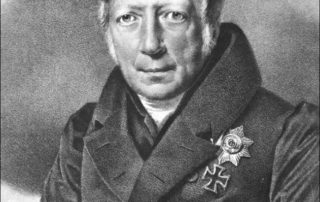
How understanding the humanities' past illuminates their present and future importance, as they have discovered new findings critical to understanding our world.

"Philosophia vitae magistra": philosophy is the teacher of life Who is unaware that human life without the liberal arts is not only destitute and empty, but indeed far inferior and worse to that of many animals? When I then turn my attention to philosophy itself, how many times have I heard from you that it in [...]
The current administration proposes to do away with the National Endowment for the Humanities, as well as with the National Endowment for the Arts.
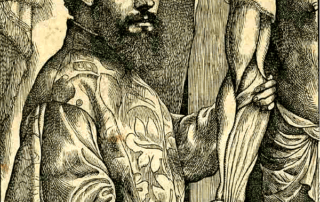
How the current shape of healthcare can learn much from investigating Renaissance perspectives on the human condition, and the manner in which humanists describe this condition.

On silence. Why poets, and others, look for quietude – with lovers, friends, or by themselves – in lieu of words Doodle: Good morning, Noodle. You appear deep in thought. Noodle: Thanks for the interruption. I’m puzzled by a poem. As a professor of the humanities, I’ve read a lot of poetry, and should be [...]

An historian asks about the ways the humanities are suitable for modern society.
Science and (the absence of) happiness: to what degree do science and technology condition our sense of happiness? During the last few generations humankind has made an extraordinary advance in the natural sciences and in their technological application and has established humanity's control over nature in a way never before imagined.... People are proud of these achievements, [...]