


Start with Vivid: on the poetry of memory
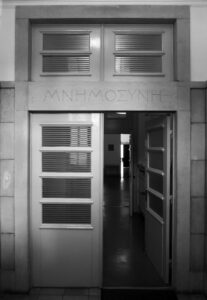
It is a main goal of the humanities to deepen and enrich our memories. With good reason Aby Warburg, one of the most creative modern historians, placed the inscription “Memory” ΜΝΗΜΟΣΥΝΗ over the entrance to his library in Hamburg, in order to honor and recognize Memory, the mother of the Muses.
Could there be a correlation, in fact, between the debilitated state of our humanities and our present concerns over the loss of memory, both individually and collectively? We hear data that dementia rates are on the rise, and apart from those affecting older Americans, a recent study found that younger adults (ages 18-34) self-reported the most rapid increase in cognitive impairment, at a percentage nearly double that of ten years ago. Some researchers have attributed this decline in memory to the “Google effect,” a reliance on technology, on artificial as opposed to natural intelligence. In line with these data, research among pre-adolescent children has demonstrated that memory and cognitive skills decline when they spend more than three hours per day on their devices.
For a world threatened by a flood of forgetting, what can the humanities tell us about reasons for this event, and a course for mitigating its peril? Are we consigning ourselves to amnesia, or in mythical terms to Lethe, the river of forgetfulness; has Memory, along with the muses, departed from our view?
Oh, no, go not to Lethe, neither twist
Wolf’s-bane, tight-rooted, for its poisonous wine…
sang Keats in his Ode on Melancholy, who with his keen sense for life saw and suffered much. Keats I think also offers us a warning and a cure.
These are the warnings and cures of the poet. While the poet is no doctor, nor laboratory scientist, nor medical researcher, the poet’s impressions provide us other, insightful vantage points on memory. Poetry shows us a sense of ourselves beyond the biological, or, if we want, a sense most authentically biological, understanding “biology” — bios, lógos, as the essential, integral condition of our existence.
Keats and other poets remind us that our lives have richer meaning in proportion to the clarity and brilliance of our memories. But we often turn from them: “Oh, go not to Lethe….” In our melancholy, or, as we imagine, in our comforts, we turn from them and enter the river.
Keats recommends another turning:
… glut thy sorrow on a morning rose,
Or on the rainbow of the salt sand-wave,
Or on the wealth of globed peonies….
Keats liked plants and colors: the morning rose, globed peonies, a rainbow on the shore. Each image is striking, and transient, time-bound. Its transience is stilled, or distilled, in memory.
That is one of the prime lessons poetry offers us: to capture the preciousness of the momentary, to remain still and attentive to the beauty of what is passing. It requires we notice things before us that are vivid in their presence.
Recently when teaching the medieval oral epic The Song of Roland, I asked students, as an analog turn, to write out various stanzas and then remark upon what they noticed. Here is one example: the beginning of stanza 172, in Glyn Burgess’s translation:
Roland struck the sardonyx stone;
The steel grates, but does not shatter or become notched.
When he saw that he could not break it,
He begins to lament over it to himself:
O, Durendal, how fair and clear and white you are!
How you shimmer and sparkle in the sun!
Charles was in the Vales of Maurienne,
When through his angel God on high told him
To give you to a captain count.
Then the noble and mighty king girded it on me.
The first question the students considered was: “what do you see that strikes you?” Many of the students initially responded with a summary of lines: Roland tries to break his sword but cannot; then he tells us how he received it from Charlemagne.
The summary is correct, but abstract. It distills a concept from the lines, but does not react to its force, its vividness. The steel grates, the sword sparkles, God’s angel speaks. The scene here — those following the poem know Roland is dying — has meaning on account of these moments. Knowing the plot, or the plot summary, waits upon our perceiving these vivid instances.
Attending to what is vivid, we hear and see the sword, also in its origin. Roland speaks to it as part of himself and his fate — one he cannot destroy. Starting with vivid perception delays our tidy (and more forgettable) storytelling. It incites questions: what am I noticing? why did I notice these things? what is their emotional affect — on Roland, on me?
None of these questions has simple or solitary answers. Moreover, they take us away from abstraction, which can block or devalue our perceptions and inhibit our responses; abstraction is bland and diverts us from discovering different tones, feelings, points of view. Readers and listeners will notice a variety of things, when they see what is vivid. Doing so makes the reading more memorable.
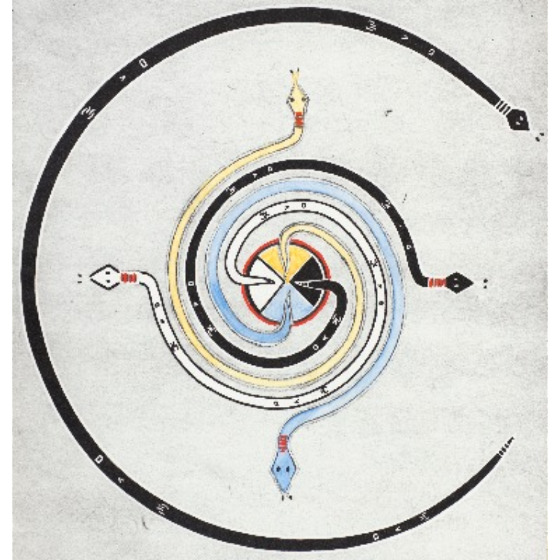
Warburg admired the art of Sandro Botticelli and Hopi snake rituals — two topics worlds apart in one sense, but in another sense — that perceiving rich, vivid, symbolic meaning — close equals. We don’t have to be lovers of poetry or Renaissance art to learn their lessons. These lessons are made lasting — memorable — as long as we begin with vividness.
Leave A Comment