


News articles and commentary on the place of the humanities in the modern world.
Military mindfulness: STEM soldiers should also cultivate the liberal arts (Joseph Zengerle, Washington Post)
Military mindfulness: STEM soldiers should also cultivate the liberal arts. The modern military needs the humanities to realize its mission. From the editorial: But even in an age of highly sophisticated warfare, our military leaders should not [...]
Kudos to our modernity (Barack Obama, Wired and Weekly Address): UPDATED
Kudos to our modernity: how science continues to transform our lives for the better, to the point that now is the greatest time in history to be alive. From the editorial: This kind of progress hasn’t [...]

Death by technology (Andrew Sullivan, New York Magazine)
Death by technology: how living with technology deprives us of silence, inwardness, and the ability to find the well-springs of life. And this condition has its own, overlooked history. From the article: The English Reformation began, [...]
The 17th-C. Plague in London: Now We Know (Nicole Staybridge, BBC)
The 17th-C. plague in London: now we know. How DNA (and Daniel Defoe) reveal the killer bacteria's identity in one of history's longest cold cases. From the article: Testing in Germany confirmed the presence of DNA [...]
The pen is mightier than the (key)board, says technology (Microsoft News Center)
In an recent study, Norwegian researchers funded by Microsoft discovered that using a pen stimulated more cerebral activity than typing on a computer. Drawing words makes the brain more prone to learning. From the article: Inspired by [...]
Healthy living from technology and modern science (Sarah Frier, Bloomberg)
Healthy living from technology and modern science: how the Chan Zuckerberg Initiative would change history within the next generation. “Can we work together to cure, prevent or manage all disease within our children’s lifetime?” Chan said Wednesday onstage at [...]

The language of numbers (Barbara Oakley, Nautilus)
The language of numbers: how learning a language can become the model for acquiring the basics of engineering. From the article: Trying to reprogram my brain sometimes seemed like a ridiculous idea—especially when I looked at the [...]
Thinking critically on the job (Kate Davidson, Wall Street Journal)
Thinking critically on the job: do workers have what it takes (non-technically speaking) to succeed in the Age of Technology? From the article: To determine the most sought-after soft skills, LinkedIn analyzed those listed on the [...]

No literature allowed (Steven Pearlstein, Washington Post)
No literature allowed: parents see little need for their children to receive a broad university education, as its ROI seems negligible. From the article: For me, there’s nothing more depressing than meeting incoming freshmen at Mason who [...]
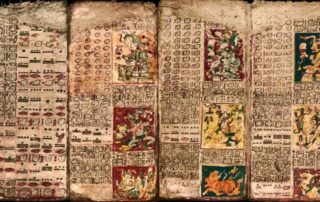
Math and the Mayans (Eric Vance, National Geographic)
Math and the Mayans: an archaeologist brings his engineering experience to bear in reinterpreting pre-Columbian calendars. From the article: Archaeologists have long looked to Venus to understand Maya calendars and tradition. But now, a fresh look [...]